











Hello, your privacy is important to us. Uniview websites use cookies to store info on your device and create the most secure and effective website . By continuing to use our websites, please accept the cookies could be stored on your device, which outlined our cookie policy and privacy policy .


_1036463_651984_0.png)






 X
 GLOBAL / ENGLISH


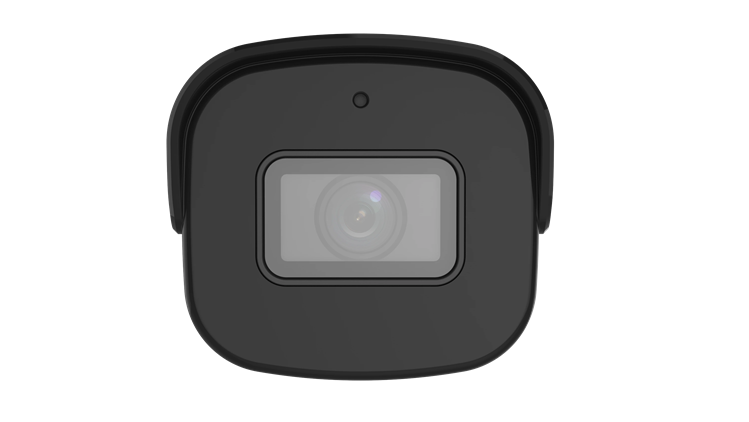
Ask how far a night vision camera can see and the honest answer starts with another question: see what? Spotting a vehicle and examining a small marking are not the same job. When a specification says “40 m IR,” it is talking about the built-in light, not promising perfect detail inside a 40 m circle. The selected lens moves the practical boundary too. Write the target on the site plan and add what the operator needs to decide when it reaches that point.
· Read “40 m IR” as the illuminator's reach, rather than 40 m of guaranteed fine detail.
· Two lens versions can share the same IR range yet have different detail distances. The UNV example below shows both sets of figures.
· Ask for a saved night clip of the actual task. An empty, stationary scene leaves too much untested.
“Can I see the van?” and “Can I read the markings on the van?” are different requirements. The first may be satisfied by a fairly small shape in the picture. The second needs enough image detail to separate one marking from another. A quotation that gives only a maximum range leaves this distinction unresolved.
Put a black carton next to a reflective sign for the night trial. Although the range is identical, the sign may glare under IR while the carton remains subdued. That simple comparison also makes focus errors easier to spot. Size is just as unforgiving: if the object occupies a few pixels, a bright image still contains scant object detail.
DORI stands for detection, observation, recognition and identification. Read it as a ladder of increasing detail, useful for an initial shortlist but silent about this site's weather, ambient light and movement. The next line in the brief should be ordinary English: “distinguish the delivery trolley from the stored pallet.” That can be checked; “see far” cannot.
A loading-yard overview answers where activity is taking place. A view of the dispatch point might need to show whether a carton is open. Trying to cover both with one wide image can leave the carton too small to inspect. Keep the overview and consider a separate view of that working point. Camera type and lighting choices outside this distance question are covered in choosing a night vision camera for reliable monitoring.
Longer focal length means a tighter frame: the remote object becomes larger, and some surrounding area disappears. Whether that is an improvement depends on the route. Trace it before choosing. An excellent close view at the stop doesn't help with the portion of the journey that falls outside the frame.
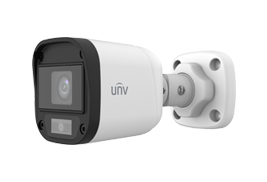
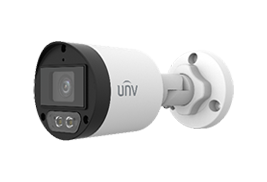
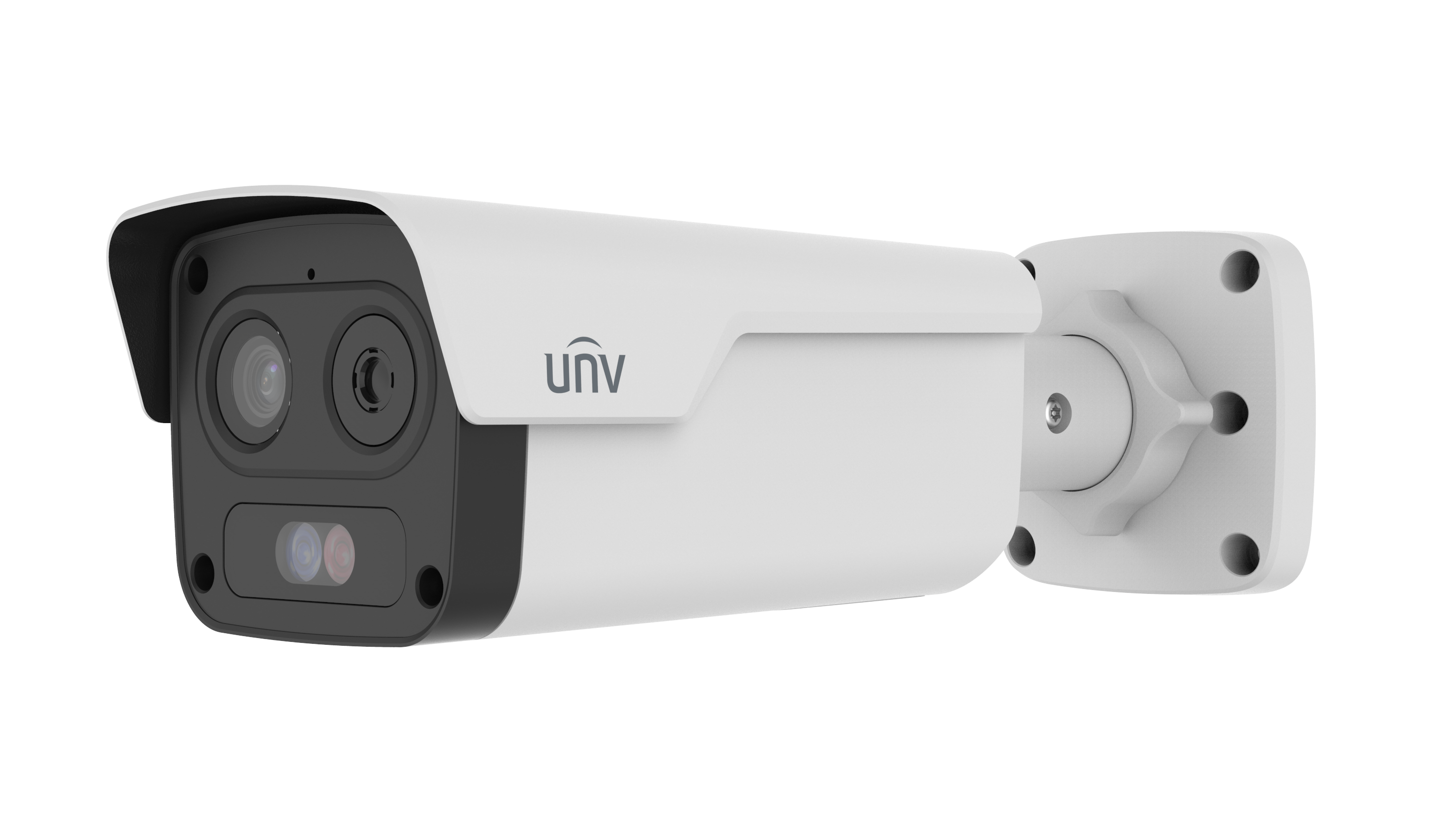
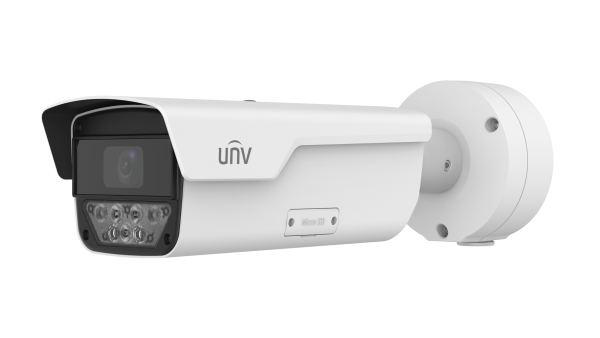
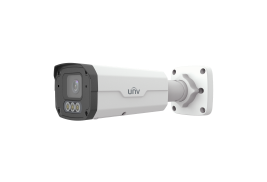
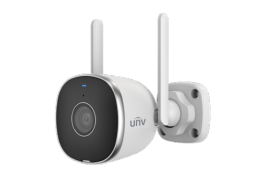
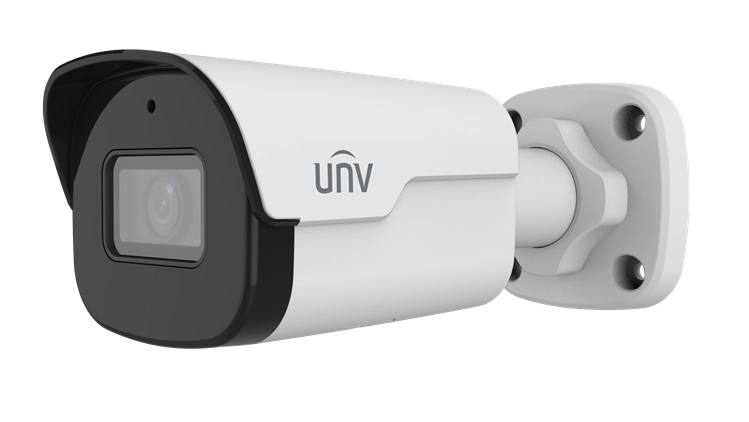
The UNV IPC2124SB-ADF28KM-I0 infrared bullet camera is part of the UNV Prime series. On its official page, UNV lists 4 MP imaging, Smart IR up to 40 m, and two fixed-lens versions: 2.8 mm and 4 mm. Looking at them side by side isolates an easily missed point. They have one published IR distance, yet their DORI distances aren't the same.
Published parameter | 2.8 mm lens | 4 mm lens |
IR illumination distance | 40 m | 40 m |
DORI detection distance | 63.0 m | 90.0 m |
DORI observation distance | 25.2 m | 36.0 m |
DORI recognition distance | 12.6 m | 18.0 m |
DORI identification distance | 6.3 m | 9.0 m |
The observation row is the quickest way to see the effect: 25.2 m for 2.8 mm, versus 36.0 m for 4 mm. Yet the IR row remains 40 m on each side. Buyers should also note that these are separate fixed-lens models. The 2.8 mm unit doesn't acquire 4 mm optics through a menu change. And the 90.0 m detection entry shouldn't be read as a 90.0 m promise for the built-in IR. It is possible for a detail-based DORI reference and a lighting specification to extend to different distances because they describe different things.
Mark three things on the drawing: camera, route and inspection point. Copy the lens variant, 2.8 mm or 4 mm, onto the quotation and order. Review the proposed image without display zoom. When the trolley is only a speck, enlargement makes a bigger speck rather than restoring texture. A different position or lens is the meaningful correction.
Don't approve the night view on brightness alone. Wheel the target through it and include nearby walls, signs and paving in the recording. Motion smear and IR reflection will then appear under realistic conditions instead of staying hidden in an empty daytime sample.
Record the carton at rest, then repeat while it crosses the dispatch point. Smear appearing only in the second clip points toward exposure. A long exposure collects movement along with light. Extra gain brings noise, and heavy noise reduction may erase wanted texture. Normal operating speed is the only useful pace for this check.
Color footage still starts with visible light reaching the sensor. Processing can stretch a weak signal but cannot replace a missing one. If the yard lamps turn off at midnight, a 9 p.m. clip covers the easier condition. Make another clip after switch-off.
At the mounting point, look for a wall or sign close to the LEDs. Its returned IR may dominate exposure; wet paving can shift the balance again. Re-angle the camera so the bright obstruction leaves the main beam, and retest before deciding that the scene needs more output.
Mist, rain and dust can send light back before it reaches the intended object. At the housing itself, dirt and webbing cause flare beside the optical window. Leave cleaning access. Then sketch the vertical angle: a high overview may capture the top of a cart when operators actually need its side.
Use an acceptance task such as “show whether a carton is open at the dispatch point.” “Long-range night vision” is too vague to settle a disagreement about the finished image.
1. Mark the nearest, usual and farthest working positions, with distances measured from the proposed camera location.
2. Move representative objects through the route. Where daily work includes both dark and reflective surfaces, bring one of each.
3. Run the route under normal night lighting, then again after any scheduled reduction. Write down the weather and ambient-light condition with the clip.
4. Watch the object from entry to exit, including the frame edges. Note the first point at which the required detail can no longer be judged.
Play a saved clip through the intended network video recording system. Check which stream is being viewed: a small preview may hide detail present in the main stream, while heavy recording compression may discard it. Approval should refer to the footage operators will actually retrieve.
Label the approved clip with its model, lens, mounting position and recording settings. It then serves as a comparison after a camera move or lighting change. Sign-off should cover the normal route and conditions—not only the easiest frame. Resolve a marginal angle, lamp or lens during commissioning, while adjustment is still expected.
Not on the strength of the IR number. The UNV table shows 40 m in both IR columns, but far shorter identification figures. Position the actual object at 40 m, record it under site lighting, and let the required detail—not the label—decide acceptance.
No. A higher pixel count can sample the same framed object more finely. It supplies neither illumination nor a faster exposure, however. Test saved clips with matching fields of view and lighting; otherwise lens and scene changes get mistaken for a resolution benefit.
Consider it once the working point becomes too small for the overview's assigned task. Let the wide camera preserve context and give the additional view a narrower brief. Before fixing its position, follow the target from entry to exit; don't judge only the place where it stops.
Treat the range figure as the beginning of a specification discussion. Send your UNV supplier the site drawing, target distances, lighting schedule and the detail operators need to see. Ask which lens version fits those tasks and what a saved night clip will demonstrate before purchase.
Founded in 2011, Uniview is a global full-stack AIoT solutions provider empowered by core ABCI technologies. With a global layout and multi-brand strategy, it operates four professional brands including UNV, uniarch, Hopetrek and youkey, covering full-scenario demands of professional security, SMB security, smart new energy and smart home.