













Hello, your privacy is important to us. Uniview websites use cookies to store info on your device and create the most secure and effective website . By continuing to use our websites, please accept the cookies could be stored on your device, which outlined our cookie policy and privacy policy .






_1036463_651984_0.png)






 X
 GLOBAL / ENGLISH


A mixed commercial property is recorded at night so that movement can be followed, events reviewed and difficult positions checked with reasonable demands on network, storage and maintenance.
The level of recorded detail needed depends on the reflective properties of the room surfaces and of the subjects, on the recording task and on the security needs. Also, because a property may be used at some time for other purposes, the camera installation should be flexible.
The recording tasks are mainly to follow subjects, to review useful details and to track vehicles. Much of the information is conveyed by large letters and numbers, and by the shape of the package rather than by fine detail. It is not usually necessary to see across the whole width of the property, especially when storage and equipment divide the property into routes. Brightness outside the assigned route is not normally the first concern.
Owing to the height of the building, cameras are mounted high up - at the building structure or suspended below the roof. The greater the mounting height, the higher the output of the illuminator needed, but this also reduces subject detail.
The required spacing can vary considerably. If storage is in structures that reach almost to the roof, the cameras cannot be spread across the width of the room; they are best mounted over the routes. A typical arrangement is a line of cameras above each route.
Colour in the night recording is not normally very important in a property, unless it is required to distinguish colour-coded packages and markings.
Infrared illuminators with high output also produce a great deal of illumination from a small area, so producing strong glare when it returns from a nearby surface. Thus the cameras have to be constructed so as to control the reflected light.
Two views are commonly separated: a broad overview and a narrower view of a decision point. The choice depends on the site area, the mounting position and the recording task.
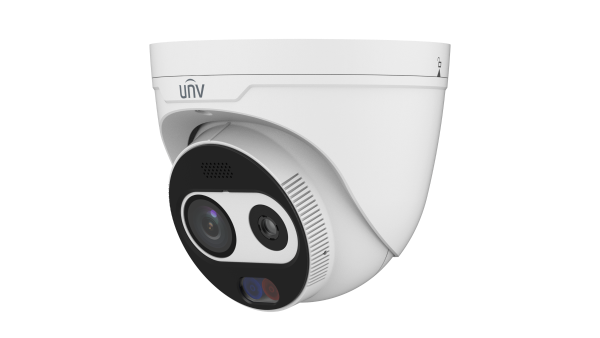
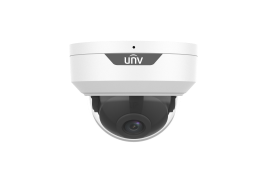
For an entrance, lobby or corridor, one model to evaluate is the UNV IPC314SB-ADF28KMC-DL-I1 mini dome. The published specification lists 4 MP, 130 dB WDR, corridor mode, Smart IR and warm light up to 30 m, with a fixed 2.8 mm lens, IP67 and IK10.
Views designed for route imaging are usually long and narrow and fit closely to the line of the route.
If the route is short, as in the case of a small store, then a camera designed for general area imaging can be used.
In a property there is often a high proportion of dust, and cleaning may not be frequent.
Cameras should be easy to clean and to service.
Where site structures occupy a high proportion of the site area, infrared illumination above the routes will bounce off the stock in the structures and provide some vertical illumination in the routes.
Illuminating the vertical faces of useful details is important, especially where the useful details are at an angle to the horizontal.
Where the routes are narrow, the cameras can be mounted at a lower level to be closer to the structures.
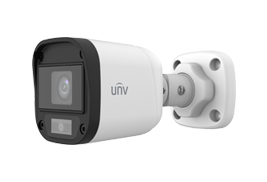
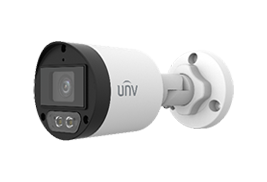
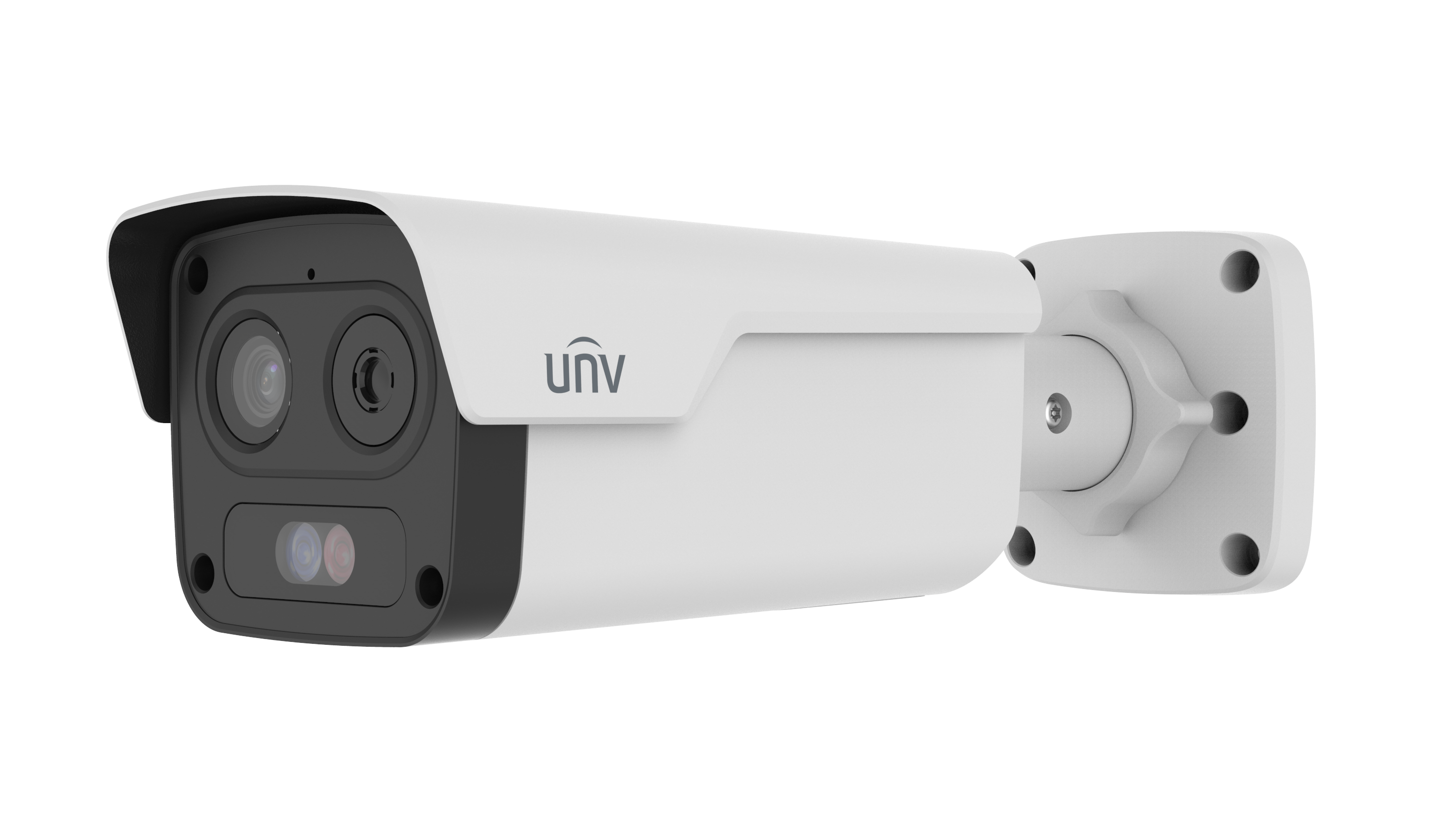
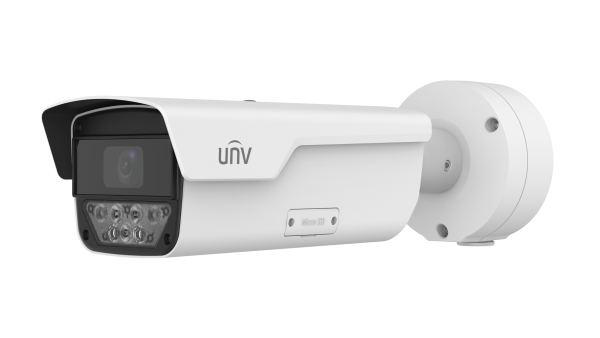
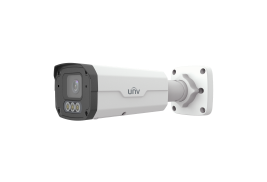
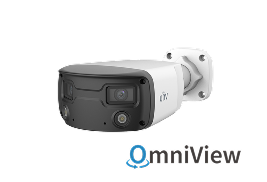
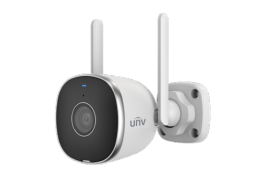
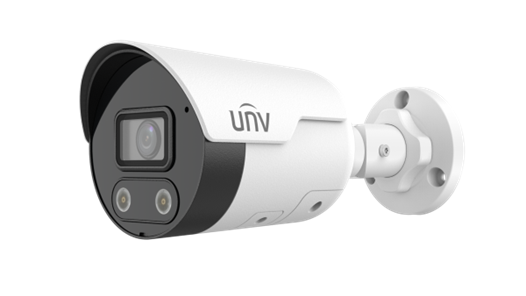
A road overview, a gate view and a perimeter view perform different jobs. One exterior model to evaluate is the UNV IPC2128SB-ADF28KMC-I1 dual-light bullet. Its published specification lists 8 MP, 130 dB WDR, IP67, fixed 2.8 mm or 4 mm lenses and Smart IR up to 40 m. That distance describes the illuminator; it does not guarantee readable detail at 40 m.
In a property there may be a danger of reflected glare from shiny surfaces such as plastic wrappings.
Direct glare must be controlled, especially at the ends of routes where warm lights might be seen directly by vehicle drivers.
Cameras with controlled warm-light brightness at the angles at which they are seen are recommended.
Glare, coverage and maintenance must all be considered carefully.
If an open doorway or a window is at the far end, the sudden change of image brightness can be disturbing.
In many properties recording is in continuous use throughout the working day. It may continue through night shifts or be reserved for after-hours review.
It is useful to have some means of reducing the recording when the property is not busy or not occupied, but without losing the assigned route.
For example, the recording can be split up by routes so that each route, or each pair of routes, can be reviewed independently.
If the property is divided into deep bays, the recording in a bay can use a separate recording profile.
Where the installation is large, an automatic system can be used to change the profile of unoccupied areas; this might rely on the movement of vehicles or on humans.
The energy consumed by after-hours recording can be reduced by having only the required lights on and using the site lighting schedule after dusk.
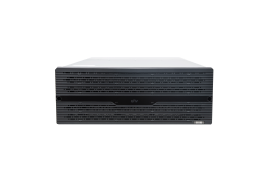
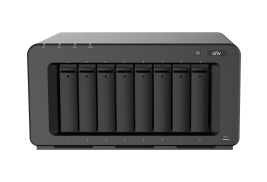
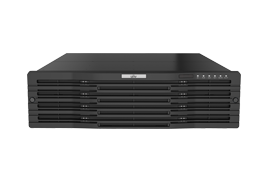
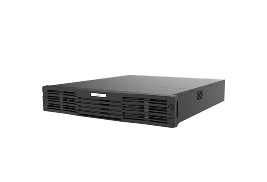
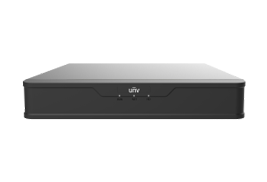
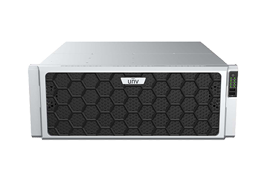
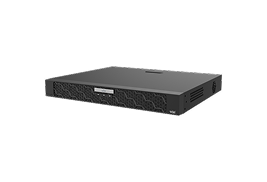
List each camera beside the NVR and write its frame rate, codec, bitrate and retention period on the same row. Put PoE demand and cable distance on the switch schedule before ordering. Confirm the exact camera, recorder and firmware combination, then approve a saved recording rather than only the live view.
The interiors of properties, being used for the storage of goods, are not always easy to clean.
The cameras should be enclosed or constructed so as to prevent dust and dirt from accumulating inside them.
Some dirt will inevitably settle, so the cameras should be readily accessible for cleaning.
It is useful to inspect illuminators (or at least to clean the cameras) at regular intervals. Since elevated and exterior camera positions may be difficult to reach, it is often economical to combine cleaning and camera inspection.
Infrared output and image quality should be checked during service rather than assumed from the first night test.
The maintenance plan should be prepared in advance, and the maintenance schedule should take into account the intervals between cleaning, the difficulty of access, changes in the night image and the loss of recorded detail through accumulated dirt.
Trace the routes used after hours and give every proposed position one recording task.
Use infrared when monochrome answers the review. Keep colour where it changes the decision and suitable visible light reaches the subject.
No. It describes the illuminator. Detail also depends on subject size, lens, angle, exposure, focus, weather and compression.
Use one for a costly uncertainty or before repeating the same design at many positions. State the pass question before the trial.
Keep moving tests from near and far zones with the model, lens, mount height, firmware, NVR profile and lighting state.
Founded in 2011, Uniview is a global full-stack AIoT solutions provider empowered by core ABCI technologies. With a global layout and multi-brand strategy, it operates four professional brands including UNV, uniarch, Hopetrek and youkey, covering full-scenario demands of professional security, SMB security, smart new energy and smart home.