











Hello, your privacy is important to us. Uniview websites use cookies to store info on your device and create the most secure and effective website . By continuing to use our websites, please accept the cookies could be stored on your device, which outlined our cookie policy and privacy policy .






_1036463_651984_0.png)






 X
 GLOBAL / ENGLISH


Stand at a warehouse gate after the last truck has gone. One frame can contain a black service road, a brightly lit guard room and, every few minutes, a pair of headlights. Walk inside and the trouble is different. There may be light between the racks, but a pallet moving across the aisle can still look soft on playback. So a whole site should not be built around “the best night camera.” Each position should be chosen after writing down what that view must prove.
img.Best Night Vision Cameras for Industrial and Warehouse Security.webp
Start with the floor plan, then walk the route after hours. A daytime survey cannot show which lamps the night shift switches off. It also misses the bright rectangle behind an open dock door, and the glare that wet concrete may throw back at a lens.
Write one plain job beside every camera mark: show a vehicle crossing the gate line; confirm whether a pallet entered bay four; keep the package color visible at the dock. A technician can test those jobs. “Cover the warehouse” tells that technician almost nothing.
Mark the farthest useful point in each view, too. During the trial, put a cone or carton on that spot. A long infrared range sounds reassuring, yet the object may occupy too few pixels to answer the original question. The Uniview warehouse solution describes Smart IR as a way to balance near and distant brightness. It still pays to look around the mount: a pale wall or metal beam close to the camera can bounce IR straight back.
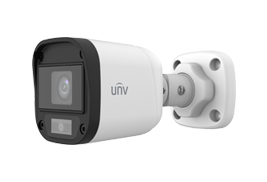
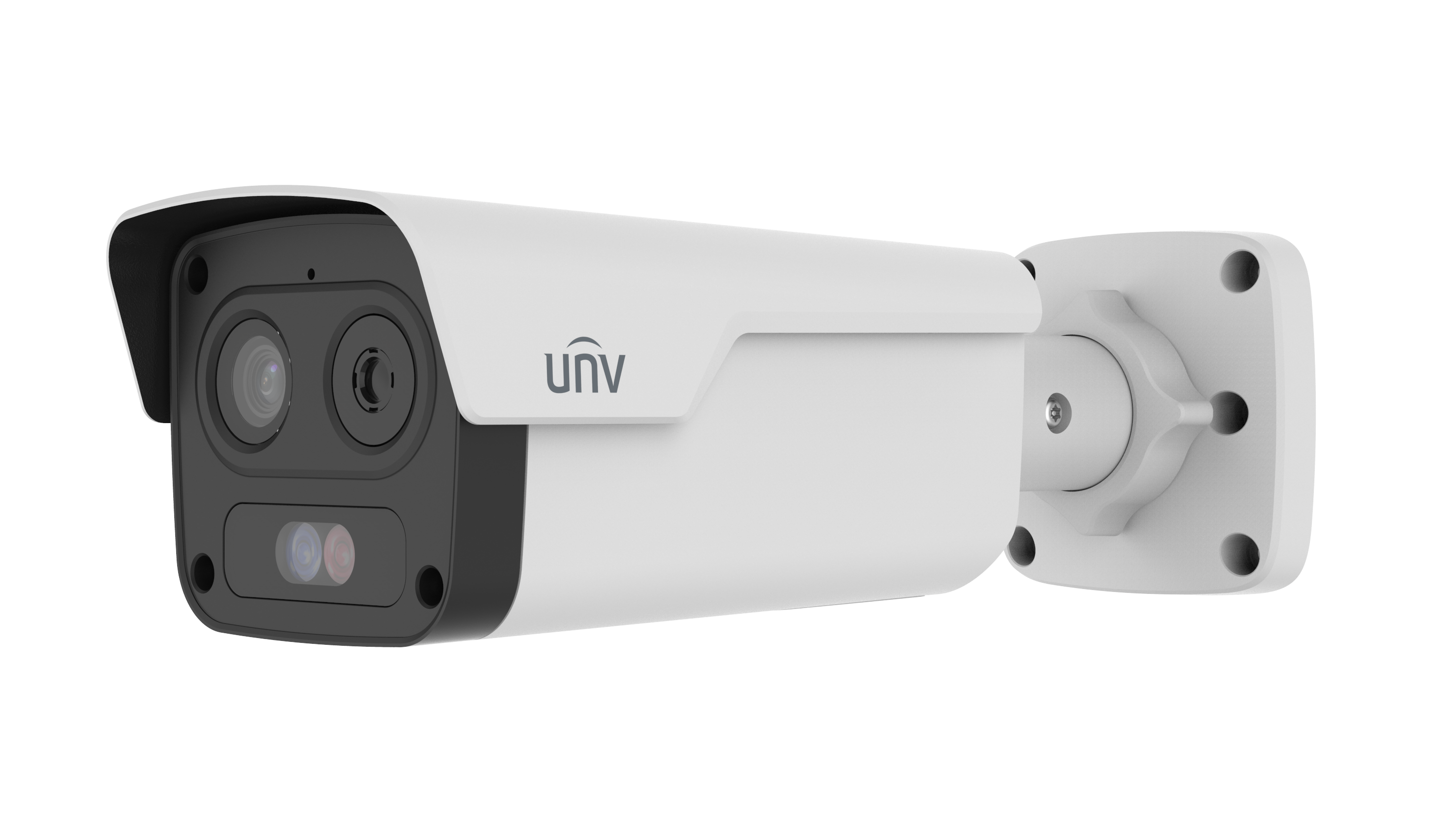
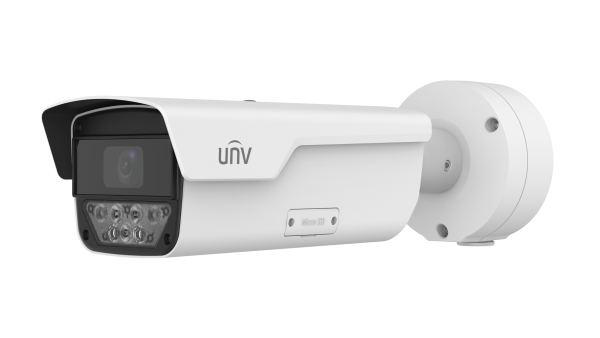
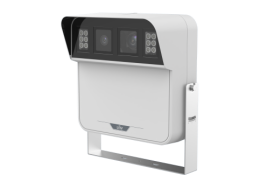
For an unlit fence, side entrance or service lane, a fixed IR bullet is a sensible place to begin. It provides its own infrared light and changes to monochrome when visible light is too weak for color. That is not a compromise if the job is simply to show movement or direction of travel.
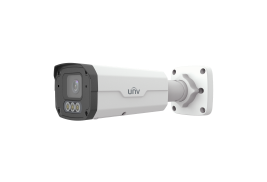
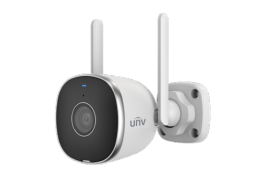
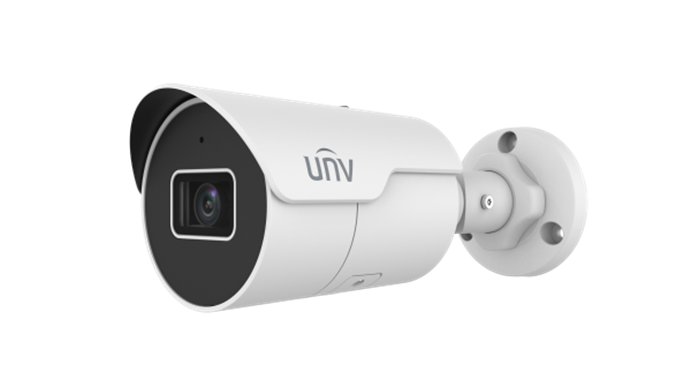
The 8 MP UNV IPC2128LE-ADF28KM-H EasyStar bullet fits that description. On the data sheet, Smart IR reaches up to 50 m. The same page gives the less glamorous—but important—details: 120 dB WDR, PoE and IP67 protection. Lens choice is 2.8 mm or 4 mm, both fixed.
Do not read “50 m” as “read any label at 50 m.” It describes the IR illuminator. Detail is another question, answered by putting the test object where it matters and moving it through the frame. Need more width? Start with 2.8 mm. The 4 mm option trims the sides and gives a distant object more space in the picture. Slow shutter, bad focus or a reflection beside the lens will still spoil either view.
img.UNV EasyStar Fixed IR Bullet Camera.webp
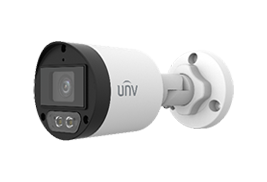
Nothing stays constant for long at a loading bay. Halfway through a delivery, the dark door may roll up and reveal a lit building behind the truck; moments later the headlights swing across the concrete. That changing backdrop is a good argument for considering a varifocal dual-light camera. Its composition can be tuned on site before the installer decides whether the operating rules favor IR, visible light or a mixture of both.
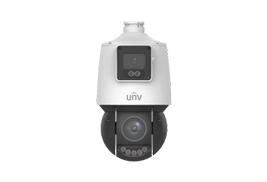
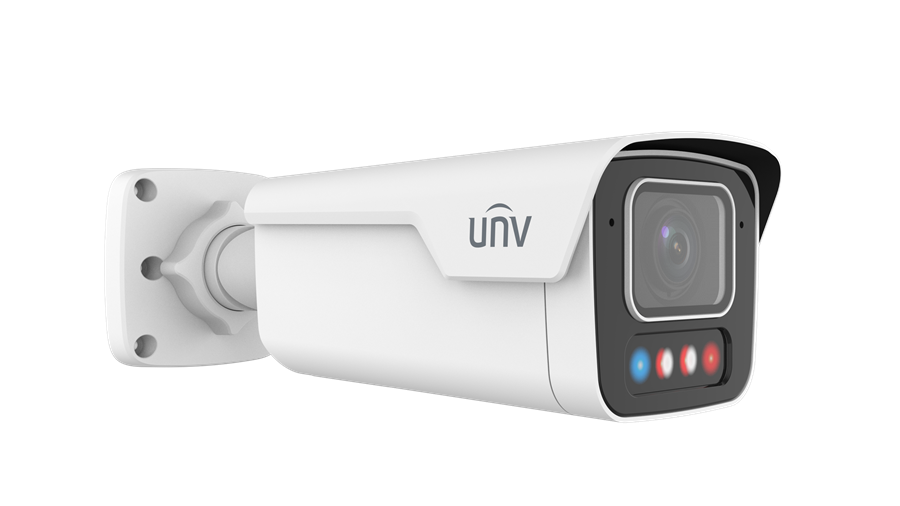
One candidate is the UNV IPC2B18SE-ADZKMC-WP-I1-NB OwlView Plus bullet. Behind its F1.2 varifocal lens sits an 8 MP 1/1.8-inch sensor. Both its IR and warm-light figures are listed at up to 40 m. The product page also records 130 dB WDR, IP67, IK10, PoE and a microSD limit of 512 GB.
Do the zoom adjustment with a truck or pallet in position. An empty apron makes almost any framing look tidy. Next, record an actual pass and stop the video where staff would expect to see useful detail. When color is required, note the moment the warm light starts—and inspect the seconds just before it. Repeat with the bay door open. A clean result against a closed door covers only half the scene. Ask what remains visible before the warm light starts, whether the foreground washes out and whether package color stays stable through the change.
Some ceiling light usually remains in a rack aisle, even overnight. The view is shorter than an outdoor lane, and a turret housing can tuck in beside a beam. Color may be genuinely useful here: perhaps two cartons share a shape but not a color, or the state of a warning lamp matters during a review.
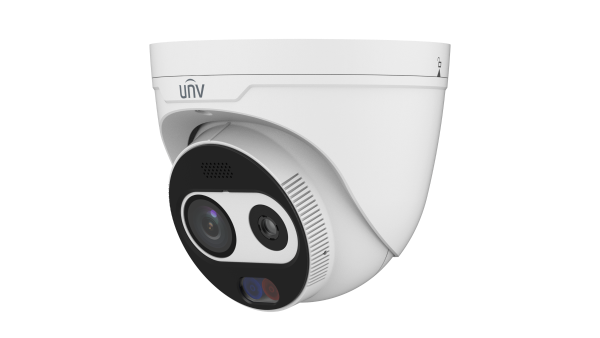
For example, the UNV IPC3634SE-ADF28K-WP-I1 turret has a 4 MP, 1/1.8-inch sensor behind an F1.0 fixed lens. Its data sheet puts minimum color illumination at 0.0003 lux, specifically at F1.0 with AGC enabled. Read farther and it gives 30 m for the warm light, plus 130 dB WDR and IP67, IK10 and NEMA 4X ratings.
A lux figure without its test conditions is not very helpful. For a practical check, have a member of staff move a pallet down the aisle at the usual pace, then open the recording. Look at the label and the color at the far end rather than judging the general brightness. Leave a stationary carton until last; it is the easy subject. For lens choice, 2.8 mm shows more aisle than 4 mm, although mounting position and aisle width will decide which one works.
The UNV OwlView range approaches low-light color with large sensors, wide apertures and Wise-ISP processing. That is useful image information, not a way to suspend movement. Whether the pallet looks crisp or smeared can still come down to exposure time and the light that actually reaches it. Where color and motion both matter, test them in the same pass.
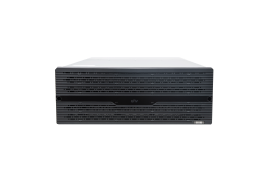
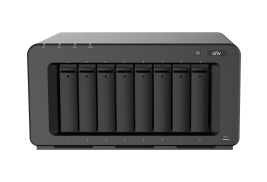
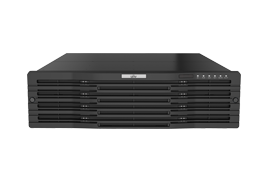
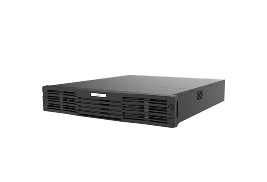
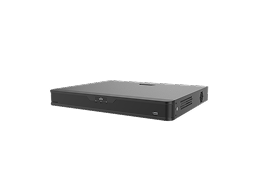
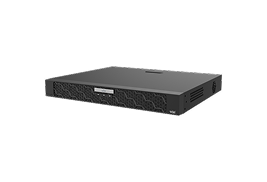
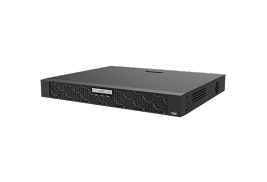
List every camera beside the NVR rather than checking each box separately. Total the incoming bandwidth using the resolution, frame rate and codec that will really be used. Storage needs similar honesty. Write down the daily hours, expected bitrate and retention days, then calculate the capacity. A dock recorded around the clock will land far above a quiet aisle that relies on tested event rules.
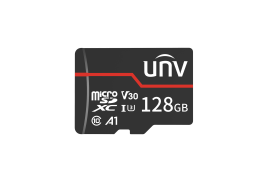
Before mounting begins, add the PoE loads and measure the cable runs. That catches an undersized switch while it is still cheap to change. An outdoor link may also need suitable surge protection. On supported cameras, microSD recording may bridge a network break. It should not be mistaken for the main retention plan. The design must identify the primary recording location, the people allowed to retrieve video and the export procedure.
An end-to-end design can draw its cameras and NVRs from Uniview. The order still deserves a line-by-line check of model numbers and firmware compatibility. A family name is a convenient label; it does not mean that every camera underneath it behaves identically.
Run the trial with handover settings, not a specially polished demonstration profile. That means the intended resolution, frame rate, codec and exposure. A vehicle or pallet is ideal, although a person-sized test board is better than an empty scene; it should cross both near and far zones. Watch once at normal speed. Then replay the clip and stop at the moment an operator would need to make the call.
Blur comes first in the review. Good exposure is little comfort when the moving subject has turned into a smear. After that, examine focus, clipped highlights on nearby objects and background detail; include color stability only where the brief requires color. Change the bay door and headlights and try again. For an IR camera, shine a torch around the mount and look for reflective neighbors—walls, beams, cobwebs, rain spots or dusty glass.
Keep the accepted clip as part of commissioning. Beside it, write down mount height, lens position, exposure and the lighting state during the test. Six months later the racks may be fuller and temporary equipment may block part of the scene. The old clip and notes give maintenance staff a fair baseline instead of somebody's recollection.
One model need not serve the dark perimeter, the loading bay and the rack aisle. Fixed IR is enough when monochrome answers the question. A changing dock benefits from the adjustment available in a varifocal dual-light bullet, while a wide-aperture turret is a candidate for shorter indoor views where color carries evidence. The deciding evidence should be the site's night recording, not a bright brochure frame.
Resolution alone cannot answer this. The subject must have enough pixels at its real distance, and lens angle, exposure and compression all change the result. Review a saved clip from the proposed mount before committing.
Use infrared when the lights are off and a monochrome record will do the job. Choose full color only when color contributes evidence and the subject receives enough ambient or supplemental visible light.
No. It is a listed illumination distance. Subject size, lens, weather, exposure and camera angle still affect the detail. Put the required item at that distance and review it while it moves.
Begin with the site's retention rule and operational risk, then size the storage. Continuous video preserves the whole timeline. Event-based recording saves capacity, provided the trigger rules have been proven during ordinary warehouse activity.
Keep the accepted night clip, plus the settings that produced it. Add the lens position, mount height, lighting state and NVR configuration. If the scene later looks different, this is the baseline for finding out why.
Founded in 2011, Uniview is a global full-stack AIoT solutions provider empowered by core ABCI technologies. With a global layout and multi-brand strategy, it operates four professional brands including UNV, uniarch, Hopetrek and youkey, covering full-scenario demands of professional security, SMB security, smart new energy and smart home.